7 Ocean Animals Coloring Pages (Free Printable PDFs)
Ocean animal coloring pages: a smiling octopus, sea turtle, jumping dolphins, a whale and her calf, clownfish in an anemone, seahorses on a coral reef and a beach crab. Click any page for a large preview, or tick Add to bundle to download several pages as one PDF (A4 or US Letter).
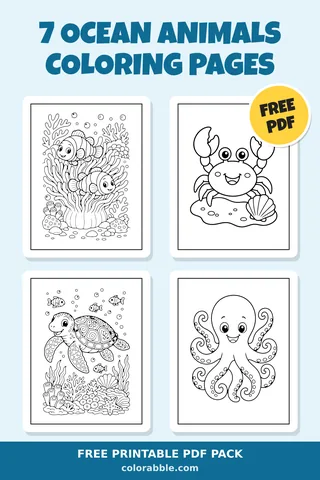
Download all 7 ocean animals pages in one PDF
One file, every page in this topic plus a contents page — print the whole set at once. Free for personal & classroom use.
404 KB (Letter) · 404 KB (A4) · 8 pages incl. contents page
How to use these ocean animals coloring pages
Ocean pages are great for teaching that the sea is full of color. Coral reefs are some of the most colorful places on Earth, so bright pinks, oranges and purples are realistic here. Start by coloring the water, or leave it white and focus on the animals; both look good.
The pages fit neatly into an "under the sea" unit at school, a summer holiday by the beach, or a trip to an aquarium. Print the whole set with the "Download all" pack and make an ocean wall display.
Step by step: coloring a ocean animals page
- Choose a habitat color for the background: light blue for shallow water, darker blue for the deep sea.
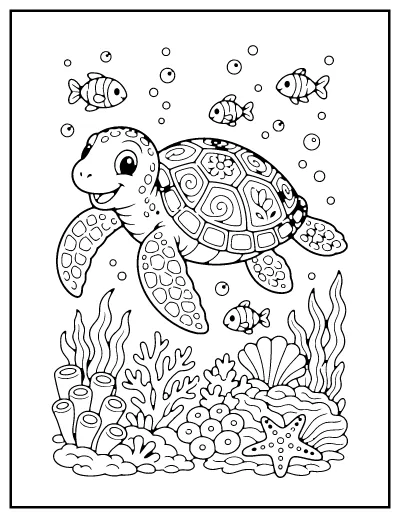
- Color the animal first, using a photo for patterns like the clownfish's stripes or the turtle's shell plates.
- Add the coral, seaweed or sand in bright contrasting colors.
- Finish with bubbles left white, or circled in light blue, to bring the water to life.
Which pages suit which age?
- Ages 2–4
- Crab on the Beach, Smiling Octopus, Whale and Baby and Dolphins Jumping over Waves have big, friendly shapes.
- Ages 5–8
- Sea Turtle Swimming and Clownfish and Sea Anemone have more patterns: shell plates, stripes and wavy tentacles.
- Ages 8+, teens and adults
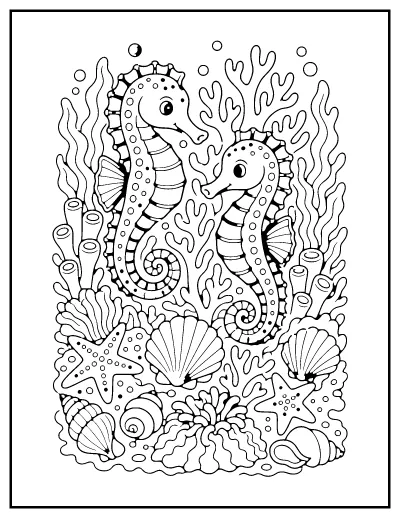
- Seahorses on the Coral Reef is detailed, with lots of coral texture to color.
Printing tips
- Blue paper makes a quick underwater background. Color the animals with bright crayons so they pop.
- For an ocean mural, print all pages, color them, cut out the animals and glue them onto a long blue paper sheet.
- Markers make reef colors vivid. Use 100 gsm paper or thicker to avoid bleed-through.
- Choose A4 outside North America and US Letter in the US and Canada. Both PDFs keep safe margins.
Coloring ideas & activities
- Ocean zones: sort the colored animals into beach, reef and open ocean.
- Bubble wrap prints: paint bubble wrap blue and press it on the background for a water texture.
- Clownfish stripes: look at a photo and copy the orange-white-black pattern exactly.
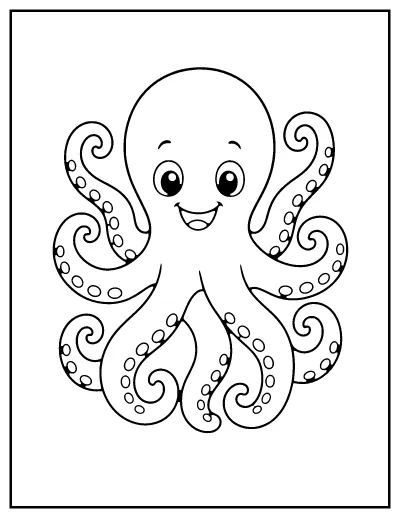
- Count the arms: octopuses have eight. Check yours, then color each arm a different shade.
- Beach day memory: after a beach trip, color the Crab on the Beach and glue on a little real sand.
- Protect the ocean: talk about keeping beaches clean and why plastic is harmful to turtles.
What kids practice with these pages
Ocean pages support early science (habitats, food chains, marine animals) and teach how background colors can make the main subject stand out.
Every page in this collection
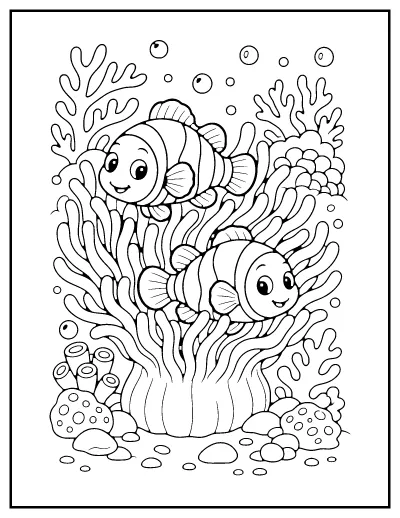
- Clownfish and Sea Anemone: Two striped clownfish play among the wavy tentacles of a sea anemone.
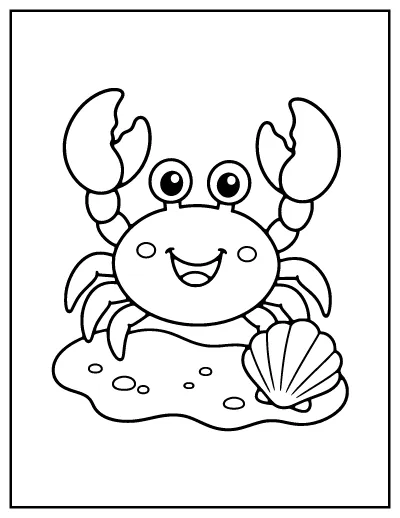
- Crab on the Beach: A smiling crab with big claws sits on the sand beside a shell.
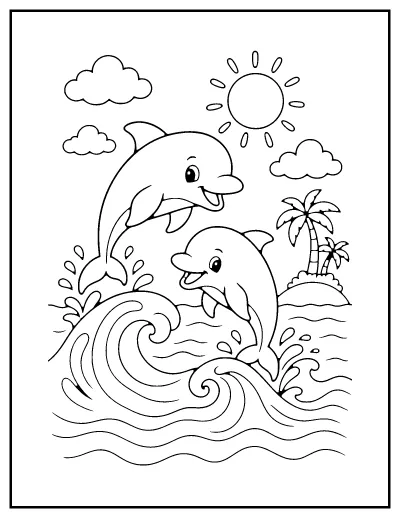
- Dolphins Jumping over Waves: Two happy dolphins leap over curling waves near a little island.
- Sea Turtle Swimming: A sea turtle with a patterned shell glides over a coral reef among small fish and seaweed.
- Seahorses on the Coral Reef: Two seahorses curl their tails around branching coral surrounded by shells and starfish.
- Smiling Octopus: A smiling octopus waves its curly tentacles.
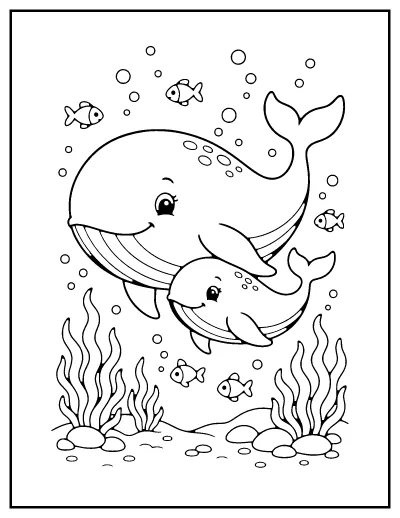
- Whale and Baby: A big gentle whale swims beside her baby through bubbles and seaweed.
Fun facts to share while you color
- An octopus has three hearts and blue blood.
- Clownfish live among sea anemone tentacles; a mucus coating helps protect them from the stings.
- In seahorses, the male carries the eggs in a pouch until they hatch.
- Sea turtles return to lay their eggs on beaches, often near where they themselves hatched.
- Blue whales are the largest animals known to have ever lived.
- Dolphins sleep with one half of their brain at a time so they can keep surfacing to breathe.
- Crabs usually walk sideways because of how their legs bend.
Ocean Animals coloring pages FAQ
Are these good for an ocean unit at school?
Yes — print the whole set as one PDF with the “Download all” button and use them for a sea-life lesson.
Which pages are for toddlers?
Pages tagged “Ages 2–4” have big shapes and very few small areas.
Can I color these online?
Yes. Every page has a "Color online" button with tap-to-fill, which works well for big shapes like the whale and octopus.
Are the animals realistic enough for a science lesson?
They are simplified and friendly, but each one keeps its key features (eight arms, shell plates, clownfish stripes), so they work for introducing marine animals.
Which ocean page is most detailed?
Seahorses on the Coral Reef has the most texture and small spaces, so it suits older kids and adults with colored pencils.
How can I make the water look realistic?
Use two or three blues: lighter near the surface and darker toward the bottom. Leave small white gaps for light shining through the water.