6 Flower Coloring Pages (Free Printable PDFs)
Flower coloring pages for every age: roses, tulips, daisies, a wildflower meadow with bees, a window-sill flower pot and tropical hibiscus — simple blooms for kids and detailed bouquets for adults. Click any page for a large preview, or tick Add to bundle to download several pages as one PDF (A4 or US Letter).
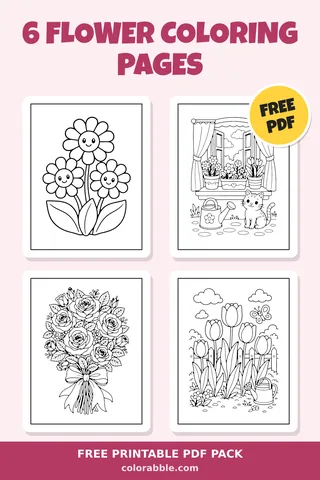
Download all 6 flower pages in one PDF
One file, every page in this topic plus a contents page — print the whole set at once. Free for personal & classroom use.
412 KB (Letter) · 412 KB (A4) · 7 pages incl. contents page
How to use these flower coloring pages
Flowers are a natural starting point for learning color choices: petals, stems and leaves are easy to tell apart, and real flowers come in almost every color. Have a few photos of real flowers (or a walk in the garden) ready as a reference, especially for older kids trying realistic colors.
The collection goes from simple daisies for toddlers to a detailed rose bouquet and tropical hibiscus for adults who enjoy blending and shading petals.
Step by step: coloring a flower page
- Look at a real flower or a photo and notice that petals are rarely one flat color.
- Color each petal from the center outward, pressing harder near the middle and lighter at the edges.
- Use two greens for leaves and stems, a darker one along one side for shadow.
- Add the background last: a soft sky, a pot or a garden with bees.
Which pages suit which age?
- Ages 2–4
- Daisy Flowers for Toddlers and Tulip Garden have bold outlines and big petals.
- Ages 5–8
- Wildflower Meadow with Bees and Flower Pot on the Windowsill add bees, leaves and a little scene to color.
- Ages 8+, teens and adults
- Rose Bouquet and Hibiscus Tropical Flowers are detailed pages for pencils, shading and blending.
Printing tips
- For blending with colored pencils, slightly textured drawing paper holds more layers than copy paper.
- Watercolor pencils on 160 gsm+ paper give the petals a soft, painted look.
- Print a garden page for Mother's Day or a teacher thank-you card: color, cut, and glue onto folded card.
- Choose A4 outside North America and US Letter in the US and Canada. Both PDFs keep safe margins.
Coloring ideas & activities
- Shading petals: color each petal darker near the center and lighter toward the edges.
- Complementary colors: try purple flowers with yellow centers, or red flowers with green leaves, opposites on the color wheel.
- Bee count: on the wildflower page, count the bees and talk about pollination.
- Pressed-flower pairing: press a real flower in a book and glue it next to your colored page.
- Garden plan: after coloring the Tulip Garden, plan a real flower bed or a pot of bulbs to plant in autumn.
- Seasonal flowers: color tulips in spring, wildflowers in summer and the hibiscus as a tropical reminder in winter.
What kids practice with these pages
Flower pages are an easy way to learn shading, blending and observation from real life, and they make lovely handmade cards for birthdays, Mother's Day and thank-you notes.
Every page in this collection
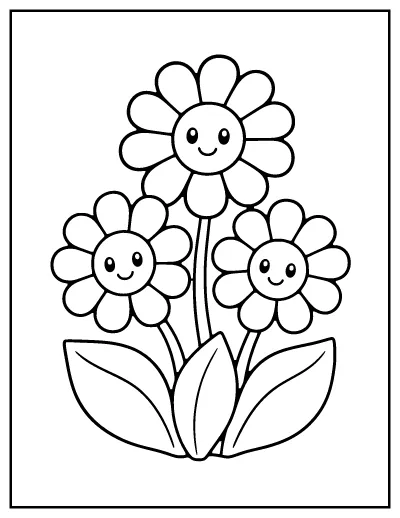
- Daisy Flowers for Toddlers: Three big daisies with round centers and big leaves, drawn extra simple for toddlers.
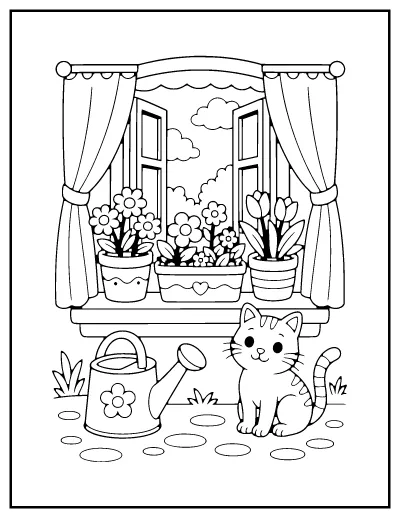
- Flower Pot on the Windowsill: Potted flowers bloom on a sunny windowsill beside a watering can and a curious cat.
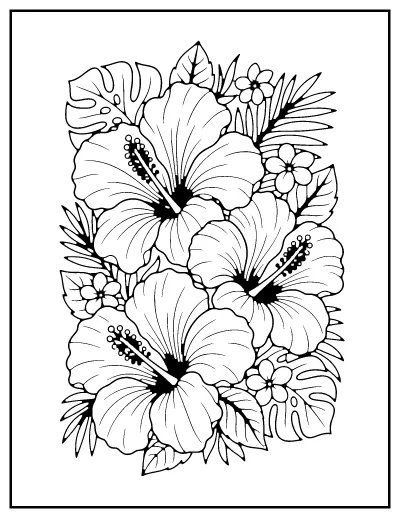
- Hibiscus Tropical Flowers: Big tropical hibiscus blooms with long stamens and glossy leaves.
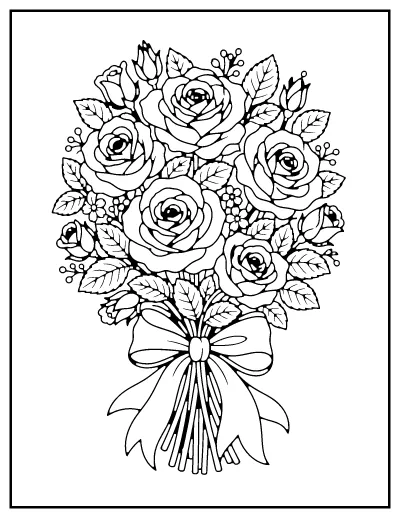
- Rose Bouquet: A bouquet of roses with layered petals, leaves and a ribbon bow.
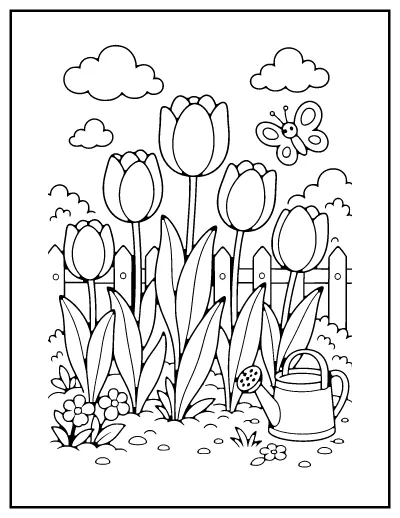
- Tulip Garden: A row of tall tulips stands in the garden with a watering can and a butterfly nearby.
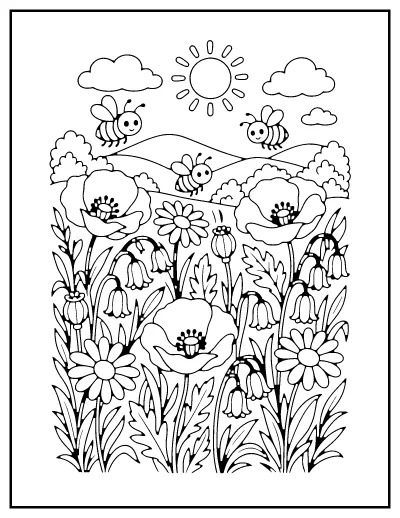
- Wildflower Meadow with Bees: A meadow of poppies, daisies and bluebells buzzes with friendly bees.
Fun facts to share while you color
- Tulips were so valuable in 17th-century Holland that single bulbs sold for very high prices, an episode known as "tulip mania".
- Daisies are composite flowers: the yellow center is made of many tiny flowers called florets.
- Bees can see ultraviolet light, and many flowers have UV patterns, invisible to us, that guide bees to the nectar.
- Hibiscus flowers often last only a day or two, but the plant keeps producing new blooms.
- Roses have been grown in gardens for thousands of years and come in thousands of named varieties.
- Sunflowers and daisies belong to the same plant family, the Asteraceae.
Flower coloring pages FAQ
Are there detailed flower pages for adults?
Yes — look for pages tagged “Detailed”, such as the rose bouquet and hibiscus pages.
What paper is best?
Use 120–160 gsm paper for markers; regular printer paper is fine for crayons and colored pencils.
Which flower page is best for a card?
The windowsill flower pot and tulip garden work well as card fronts, and the rose bouquet makes a lovely detailed card for adults.
Can I use watercolors on these pages?
Yes, but print on thicker watercolor or mixed-media paper (around 160–300 gsm) if your printer accepts it, so the paper does not buckle.
How do I make flowers look realistic?
Use at least two shades for each petal (darker toward the center, lighter at the tips) and two greens for the leaves. Looking at a real flower or photo while coloring helps a lot.
Which flower pages are best for adults?
The rose bouquet and the hibiscus have the most detail and look great with colored pencils, blending and soft shading.