9 Animal Coloring Pages (Free Printable PDFs)
Friendly animal coloring pages with bold, clean outlines — a curious cat, a wise owl, a happy fish, a sunny turtle and a slow little snail. Great for preschool, kindergarten and early grades. Click any page for a large preview, or tick Add to bundle to download several pages as one PDF (A4 or US Letter).
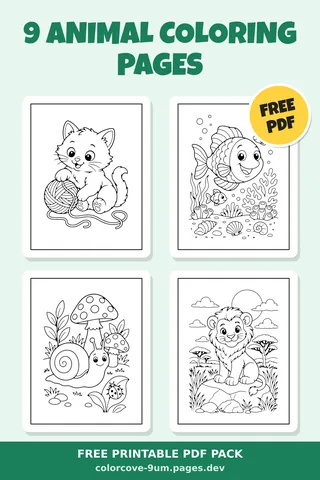
Download all 9 animal pages in one PDF
One file, every page in this topic plus a contents page — print the whole set at once. Free for personal & classroom use.
387 KB (Letter) · 387 KB (A4) · 10 pages incl. contents page
How to use these animal coloring pages
Animal pages are often the first coloring pages a child asks for, because they already know the animal and have opinions about its colors. Pick an animal your child recognizes, print it, and ask one question before they start: "What color should the fur be?" That small choice gets them invested before the crayon touches the paper.
Each page is a single animal in a simple setting, so it works for a 10-minute quiet activity or for a longer session where the background gets colored too. Use the bundle button to collect several animals into one PDF for a rainy afternoon or a substitute-teacher folder.
Step by step: coloring a animal page
- Pick the animal and look at a photo of the real one for two minutes. Notice the main body color, the lighter belly or face, and any spots or stripes.
- Color the biggest area first (the body), pressing lightly so you can go darker later.
- Add the small features: eyes, nose, ears, paws. A darker shade of the body color looks more natural than black.
- Finish with the setting (grass, water, branch or sky) in softer colors so the animal stands out.
Which pages suit which age?
- Ages 2–4
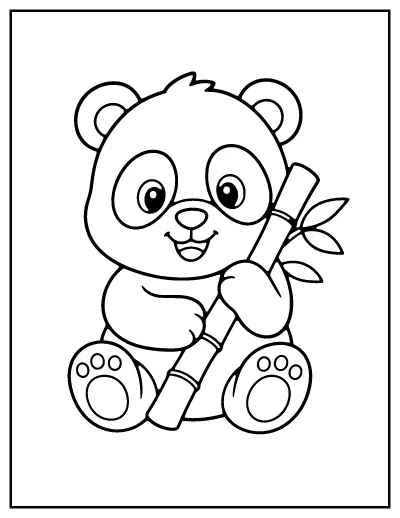
- Start with Cute Cat with a Yarn Ball, Happy Fish Under the Sea and Panda Eating Bamboo. The large closed shapes mean even a whole-fist crayon grip gets color in the right place. Chunky crayons or washable markers work best.
- Ages 5–7
- Turtle in a Flower Meadow, Snail with a Spiral Shell and Mushrooms and Baby Elephant Splashing add small extras (flowers, water drops, a spiral) that are good practice for staying inside lines.
- Ages 8–12
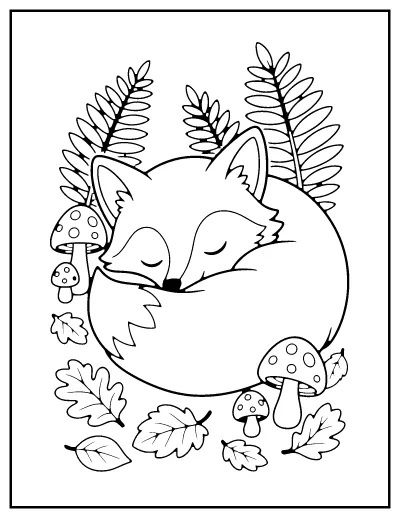
- Owl on a Branch at Night, Lion Cub in the Savanna and Sleepy Fox in the Forest have more texture lines and background, which suits colored pencils and simple shading.
Printing tips
- Print at 100% ("actual size") so the outline frame stays inside the printer margins.
- For toddlers, plain 80 gsm copy paper is fine. Markers bleed less on 100–120 gsm paper.
- If ink is running low, the PNG version prints lighter on most home printers; the PDFs give the crispest lines.
- Choose A4 outside North America and US Letter in the US and Canada. Both PDFs keep safe margins.
Coloring ideas & activities
- Real or rainbow? Color one copy with the animal's real colors and a second copy in "silly" colors, then compare them side by side.
- Habitat sort: after coloring, sort the finished pages into "lives in water", "lives on land" and "lives in trees".
- Texture practice for older kids: short pencil strokes for fur (lion cub, fox), curved strokes for feathers (owl) and dots for scales (fish).
- Story starter: ask "Where is the fox going after its nap?" and write one sentence at the bottom of the page.
What kids practice with these pages
Animal pages build vocabulary (paws, fur, feathers, scales), help young children practice controlling a crayon inside large shapes, and give older kids an easy first try at texture strokes and shading.
Every page in this collection
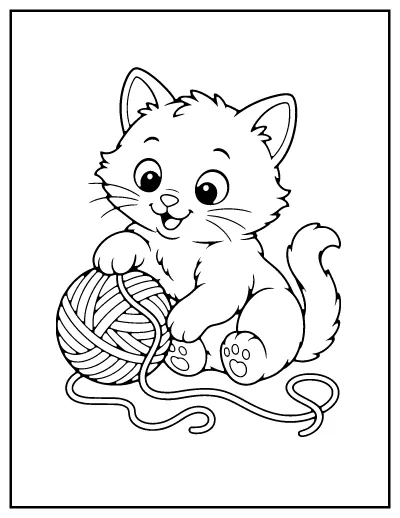
- Cute Cat with a Yarn Ball: A fluffy kitten playing with a big ball of yarn, its tail curled happily behind it.
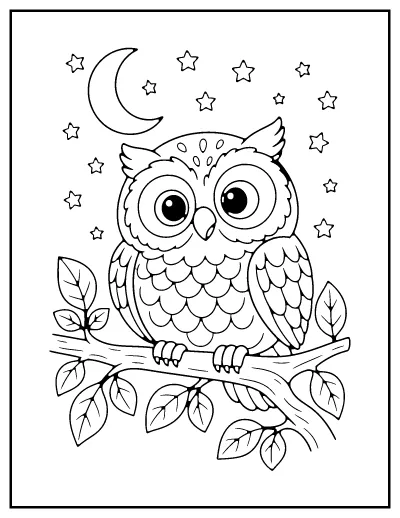
- Owl on a Branch at Night: A wide-eyed owl perched on a leafy branch under the moon and stars.
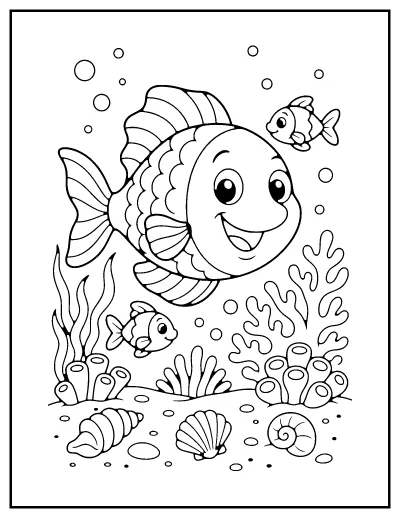
- Happy Fish Under the Sea: A cheerful fish with striped fins swims through seaweed and coral with two little friends.
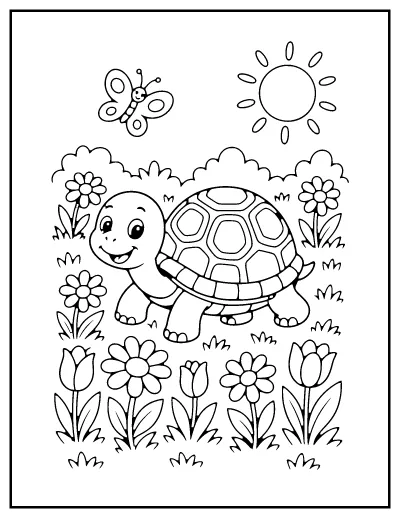
- Turtle in a Flower Meadow: A smiling turtle with a mosaic shell strolls through a meadow of daisies and tulips.
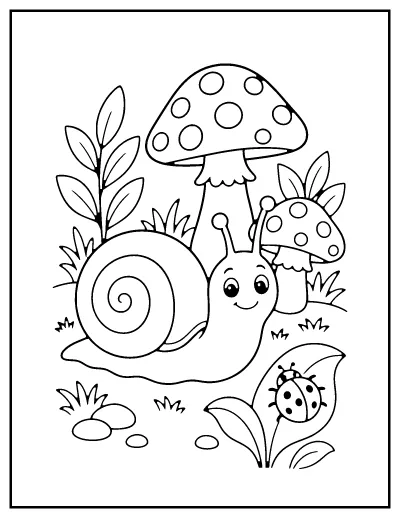
- Snail with a Spiral Shell and Mushrooms: A happy snail with a giant spiral shell slides past spotted mushrooms and leaves.
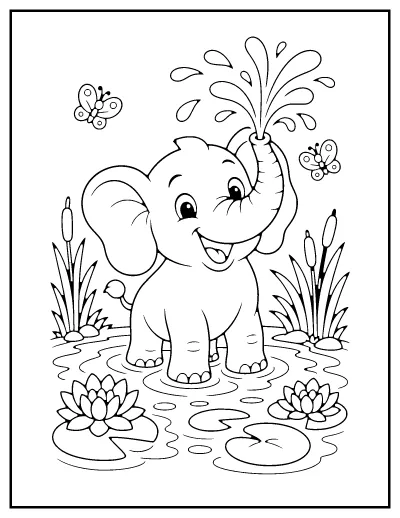
- Baby Elephant Splashing: A happy baby elephant sprays water from its trunk while standing in a little pond.
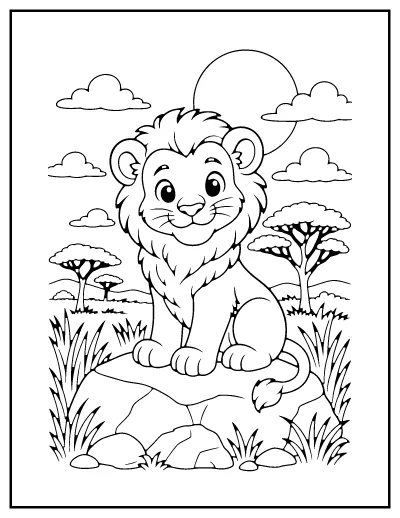
- Lion Cub in the Savanna: A proud lion cub sits on a rock with the savanna behind it, acacia trees and tall grass all around.
- Panda Eating Bamboo: A chubby baby panda munching on bamboo, drawn with big chunky shapes and thick lines.
- Sleepy Fox in the Forest: A fox curls up asleep with its fluffy tail wrapped around it, surrounded by ferns, mushrooms and fallen leaves.
Fun facts to share while you color
- A group of owls is called a parliament, and most owls cannot move their eyes, so they turn their heads instead.
- Giant pandas spend around half the day eating; bamboo makes up about 99% of their diet.
- Snails carry their shell for life. It grows with them, adding new spirals at the opening.
- Elephants use their trunks like a hose: they suck up water and spray it over their backs to cool down.
- Red foxes wrap their bushy tails around themselves like a blanket when they sleep in cold weather.
Animal coloring pages FAQ
Which animal pages are best for toddlers?
Pick the pages tagged “easy” and ages 2–4: they use thick lines and big spaces that are easy to color with crayons.
Can I use these in my classroom?
Yes. All pages are free for personal, home and classroom use. Print as many copies as you need.
Can I color these animals online instead of printing?
Yes. Every animal page has a "Color online" button that opens a tap-to-fill colorer which works on phones, tablets and computers. You can save the finished picture as a PNG.
Are the animals drawn realistically?
They are friendly, simplified animals rather than scientific illustrations. The goal is clear outlines that are fun to color, but each animal keeps its key features (the panda's eye patches, the owl's ear tufts, the elephant's trunk) so children can recognize it.