8 Dinosaur Coloring Pages (Free Printable PDFs)
Dinosaur coloring pages for little paleontologists: a friendly T-rex, triceratops family, stegosaurus, long-neck brachiosaurus, flying pterosaurs, a baby dino hatching and a fossil skeleton to study. Click any page for a large preview, or tick Add to bundle to download several pages as one PDF (A4 or US Letter).
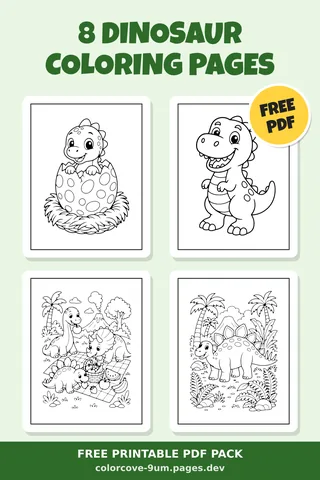
Download all 8 dinosaur pages in one PDF
One file, every page in this topic plus a contents page — print the whole set at once. Free for personal & classroom use.
496 KB (Letter) · 496 KB (A4) · 9 pages incl. contents page
How to use these dinosaur coloring pages
Dinosaurs are one of the best "hook" topics for reluctant colorers: kids often already know the names and will happily tell you which one is which. Ask them to name each dinosaur before they start, then let them decide its colors. Nobody knows for sure what color most dinosaurs were, so there is no wrong answer.
The set goes from a friendly baby T-rex for toddlers to a fossil skeleton that older kids can use alongside a museum visit or a science unit on fossils.
Step by step: coloring a dinosaur page
- Name the dinosaur and find one fact about it (what it ate, how big it was).
- Choose its colors. Greens and browns for camouflage, or anything bold, since nobody knows the real colors.
- Add patterns such as stripes, spots or a lighter belly to make it look more lifelike.
- Color the background (volcano, jungle, cliffs) to show where it lived.
Which pages suit which age?
- Ages 2–4
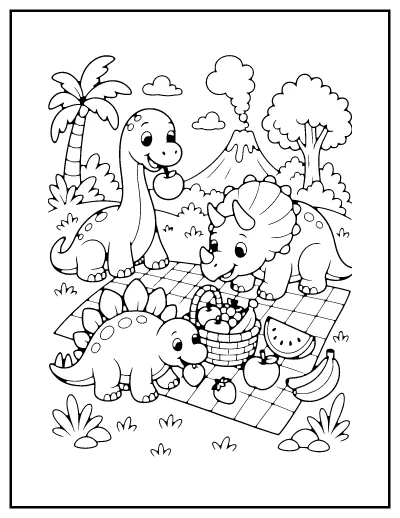
- Cute T-Rex, Baby Dinosaur Hatching from an Egg, Triceratops Family and Dinosaur Friends Picnic are friendly, never scary, with big shapes.
- Ages 5–8
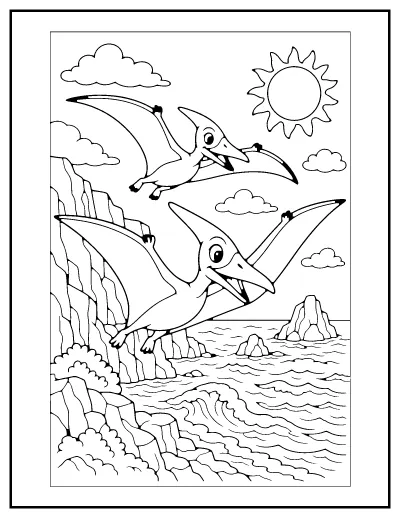
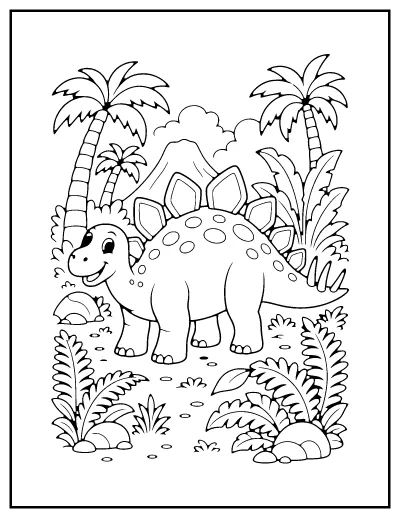
- Stegosaurus in the Jungle, Brachiosaurus by the Volcano and Pterosaurs over the Cliffs add landscapes to color.
- Ages 8–12 and up
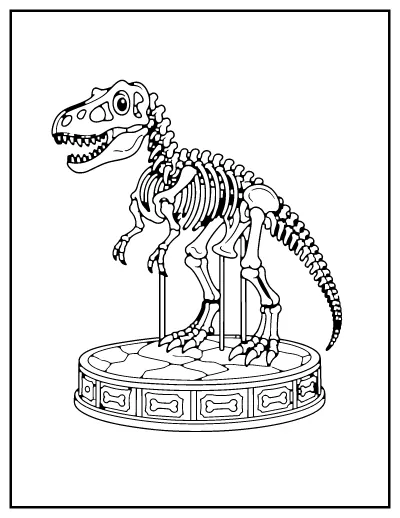
- Dinosaur Fossil Skeleton is a detailed page that works well for a "paleontologist" activity.
Printing tips
- Print the fossil skeleton on light brown or cream paper for a "dig site" look.
- The volcano and jungle pages look great with markers. Use 100 gsm paper or more to avoid bleed-through.
- All pages print at 100% scale on A4 or US Letter without cropping.
- Choose A4 outside North America and US Letter in the US and Canada. Both PDFs keep safe margins.
Coloring ideas & activities
- Name game: learn each dinosaur's name and what it means (Triceratops means "three-horned face").
- Camouflage colors: color a dinosaur so it would hide in its background, then color another copy to stand out.
- Fossil dig: color the skeleton, cut it into pieces, hide them in a sandbox and "excavate" and reassemble them.
- Timeline: line up the pages and talk about how T-rex lived much closer in time to us than to Stegosaurus.
- Herbivore or carnivore: sort the finished pages by what each dinosaur ate.
- Size line: measure out real dinosaur lengths in a hallway or playground with string.
What kids practice with these pages
Dinosaur pages build scientific vocabulary (herbivore, carnivore, fossil, paleontologist), encourage curiosity about the deep past, and give children total creative freedom with color.
Every page in this collection
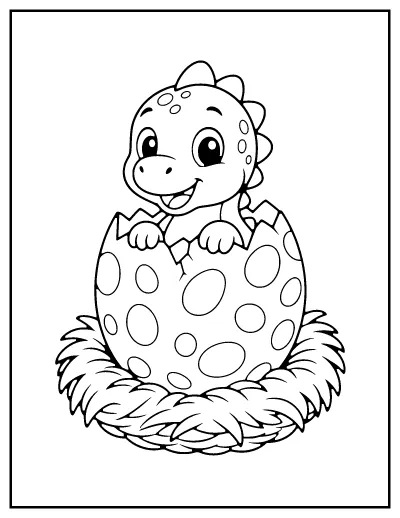
- Baby Dinosaur Hatching from an Egg: A baby dinosaur peeks out of its cracked, spotted egg for the very first time.
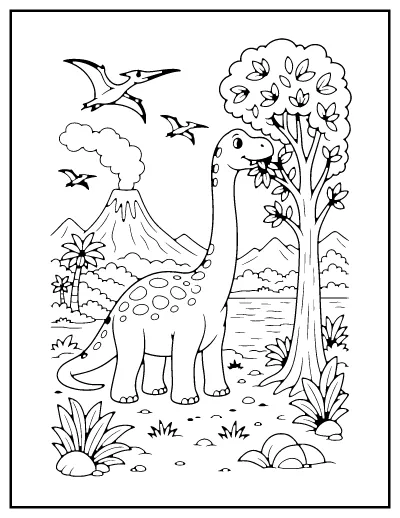
- Brachiosaurus by the Volcano: A long-necked brachiosaurus nibbles leaves from a tall tree beside a lake, with a smoking volcano behind.
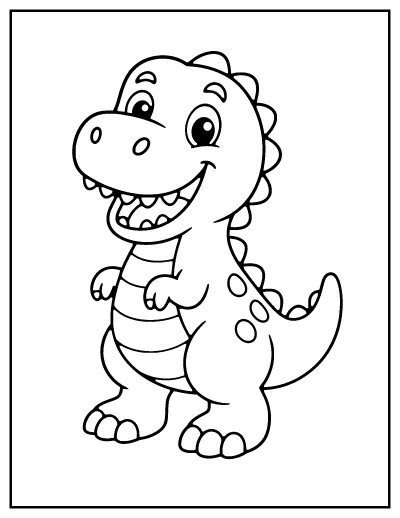
- Cute T-Rex: A baby T-rex with tiny arms and a big friendly smile, drawn with chunky lines for toddlers.
- Dinosaur Fossil Skeleton: A full dinosaur skeleton on a museum stand, with every bone outlined separately.
- Dinosaur Friends Picnic: Three baby dinosaur friends share fruit on a picnic blanket.
- Pterosaurs over the Cliffs: Two pterosaurs soar on wide wings over rocky cliffs and crashing waves.
- Stegosaurus in the Jungle: A friendly stegosaurus shows off its big back plates in a prehistoric jungle of giant ferns.
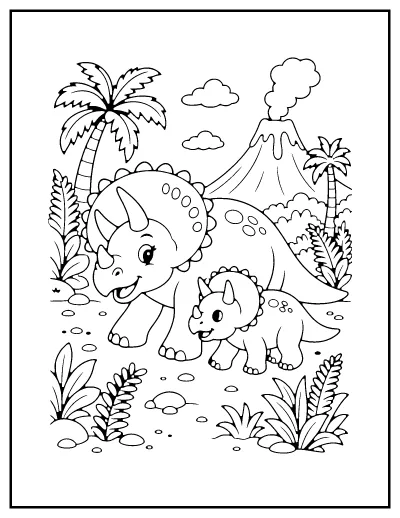
- Triceratops Family: A mother triceratops walks with her baby among ferns and palms, with a volcano far away.
Fun facts to share while you color
- Tyrannosaurus rex lived around 68–66 million years ago, while Stegosaurus lived about 150 million years ago. More time separates them than separates T-rex from us.
- Pterosaurs were flying reptiles, close relatives of dinosaurs but not dinosaurs themselves.
- Birds are living dinosaurs: they evolved from small feathered theropods.
- Brachiosaurus could probably hold its head around 12 meters (about 40 feet) above the ground, roughly as tall as a four-story building.
- Scientists have found dinosaur eggs and nests, showing that some dinosaurs looked after their young.
- Triceratops had one of the largest skulls of any land animal, up to around 2 meters long.
- Stegosaurus had a famously small brain for such a huge body.
Dinosaur coloring pages FAQ
Are these dinosaurs scary?
No — they are friendly, cartoon-style dinosaurs. Pages tagged “Ages 2–4” have extra-simple big shapes.
Are the dinosaurs scientifically accurate?
They are cute, simplified versions for coloring, but each species keeps its famous features (horns, plates, long neck) so kids can learn the names.
What colors were dinosaurs really?
For most dinosaurs we do not know. Skin color rarely fossilizes. For a few small feathered dinosaurs, scientists have studied pigment structures and suggested patterns such as reddish-brown stripes, so any color choice is fair game.
Is Pterodactyl a dinosaur?
Not technically. Pterosaurs were flying reptiles that lived at the same time as dinosaurs. The page is still part of this set because kids love them.
Which dinosaur page is best for toddlers?
Cute T-Rex, Baby Dinosaur Hatching from an Egg and Triceratops Family are friendly, simple pages with big shapes.
How can I use these in a science lesson?
Pair the fossil skeleton with a lesson on how fossils form, and use the other pages to compare plant-eaters (stegosaurus, brachiosaurus, triceratops) with the meat-eating T-rex.